


Comparing LED vs HPS vs fluorescent grow lights is useful only when the comparison describes complete lighting systems doing a defined job. Lamp wattage, purchase price and a broad claim about efficiency are not enough. You need to know what light reaches the growing area, which control gear is included and what the installation will cost to operate and maintain.
For South African buyers, this guide provides a practical comparison framework rather than a brand ranking. It separates the main technologies, explains the evidence to request and shows how to compare running costs without assuming that every LED replacement delivers the same saving. Keep crop requirements separate from the technology comparison: a lamp category is not a growing recipe.
Put the technologies in the right categories
LED fixtures use light-emitting diodes and associated power electronics. HPS, or high-pressure sodium, belongs to the high-intensity discharge family, alongside metal halide technologies. Fluorescent lamps are a different discharge-lighting category. Their control gear is generally described as a ballast; LED equipment generally uses a driver.
The US Department of Energy’s explanation of lighting control gear distinguishes fluorescent and HID ballasts from LED drivers. These are not interchangeable names for any box attached to a light.
| Technology | What to identify | Main comparison questions |
|---|---|---|
| LED | Complete fixture, driver and supported controls | What are the measured output, distribution and input power? |
| HPS | Lamp, ballast, reflector and their specified combination | Does the report describe this complete combination and its operating conditions? |
| Fluorescent | Tube type, fitting, ballast and reflector | Are replacement lamps available, and does the arrangement fit the growing area? |
Metal halide and ceramic metal halide should not be treated as additional names for HPS. Identify the actual lamp family and supported control gear. Likewise, a T8-format product may be fluorescent or LED; our T8 equipment guide explains the distinction.
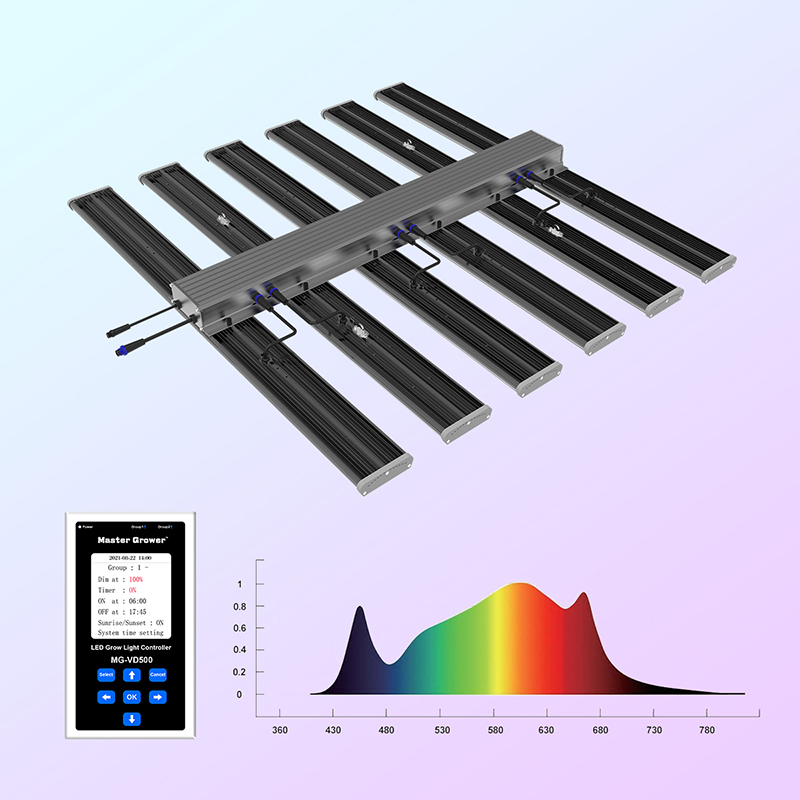
Separate input power from useful light delivery
Electrical input is measured in watts. Light-output and distribution measurements answer different questions. A complete report should make clear whether a number describes total fixture output or light arriving at a stated surface.
PPFD describes the photon arrival rate per unit area within a specified measurement band. Recording it across a surface helps describe distribution; it does not create a universal target for every plant. The lighting-functions explanation defines the terms and separates plant response from equipment measurements.
Photosynthetic photon efficacy, usually expressed in µmol/J, relates photosynthetic photon output to electrical input. The DesignLights Consortium definition of PPE provides the basis for that comparison. It is not a measurement of crop yield or a guarantee that a particular footprint is covered evenly.
Ask whether input power includes the driver or ballast, and whether both products were measured under comparable conditions. Do not compare an LED package specification with a complete HPS system and call the difference a whole-installation saving.
The high-power LED grow-light article offers related background on larger equipment. For the comparison in front of you, request a distribution report for each exact candidate rather than inferring coverage from the technology or power category.
Treat heat as part of the installation
LED does not mean heat-free. ENERGY STAR’s explanation of LED thermal management describes heat sinks transferring heat into the surrounding environment. Product temperature limits and the room’s equipment layout still matter.
Compare the maker’s installation and clearance requirements for each candidate. Include any proposed changes to the room or mounting arrangement in the cost comparison. Do not assume that replacing a lamp removes every ventilation or cooling requirement, and do not transfer the clearance instructions of one product to another.
Also keep light distribution separate from physical temperature. A cool-feeling surface is not a measurement of the light reaching a plant. Each concern needs the relevant product evidence.
Compare controls before choosing a replacement
The older article also discussed incandescent and halogen lamps. Keep them separate from the three systems compared here. If one is already installed, record its complete input power, installation requirements and documented light output in the same way. Do not use a low purchase price as evidence of low running cost, or treat a household lamp’s appearance as proof of suitability for the intended horticultural task. The broader plant growth light types guide provides the site’s category overview; this page concentrates on comparing complete systems and replacement decisions.
Check whether the exact system supports dimming, timing or external control. Then check how those functions work. An on/off timer is not variable-output control, and the presence of a control socket does not establish compatibility with an existing controller.
If you are replacing a working installation, list the parts that can remain and the parts that must change. Include fittings, control gear, mounting and any required professional installation. A cheaper lamp may not be the cheaper completed replacement.
Do not assume that an LED replacement tube can be inserted into any fluorescent fitting. Compatibility depends on the specific products and instructions. Fixed wiring or fitting modifications require appropriate qualified work; this comparison is not an electrical conversion guide.
Use a transparent running-cost calculation
The electrical calculation is straightforward:
kWh = complete-system input watts ÷ 1,000 × operating hours.
Suppose System A draws 100 W and System B draws 150 W, each for an assumed 10 hours a day over 30 days. Their calculated use is 30 kWh and 45 kWh respectively. The difference is 15 kWh, multiplied by your applicable electricity rate. These are hypothetical loads, not product specifications or evidence that the systems deliver equal light.
That last qualification matters. Lower electricity use is meaningful only alongside the required lighting task. Record your tariff source and include relevant installation, maintenance and replacement costs separately. A current South African bill is a better input than a single national price copied from an old article.
Ask what “lifetime” actually covers
A warranty, a predicted light-output maintenance period and the expected life of a replaceable component are different things. Ask which claim is being made and what conditions apply. Also ask whether a failed driver, ballast or lamp can be replaced independently.
Keep labour and access in the comparison. Replacing a lamp in an accessible fitting is a different job from removing a complete fixture from a crowded rack. Local availability of the correct part may matter more than a large but undocumented lifetime number.
Make the decision from a complete comparison sheet
Before choosing, place the candidates side by side with the same fields: exact model, complete input power, output report, distribution report, supported controls, installation requirements, replaceable parts and warranty terms. Mark missing information as unknown.
Use the South African grow light buying guide for the wider purchasing decision. This comparison has a narrower purpose: make sure the alternatives are described on equal terms before a technology label decides the purchase for you.